

Notamify as OSINT: How NOTAMs Became Critical Intelligence During Poland's Drone Crisis
9/11/2025
On September 10th, 2025, Russian drones entered Polish airspace, forcing the closure of major airports including Warsaw (EPWA), Rzeszów (EPRZ), and Lublin (EPLB). With official communications limited, aviation NOTAMs became the primary source of real-time information about the developing situation.
The Crisis Unfolds
Polish authorities detected unauthorized drone activity early on September 10th. Three major airports closed their airspace without immediate public statements explaining the closures.
NOTAMs as First Responders
The first public information came through NOTAMs for affected airports:
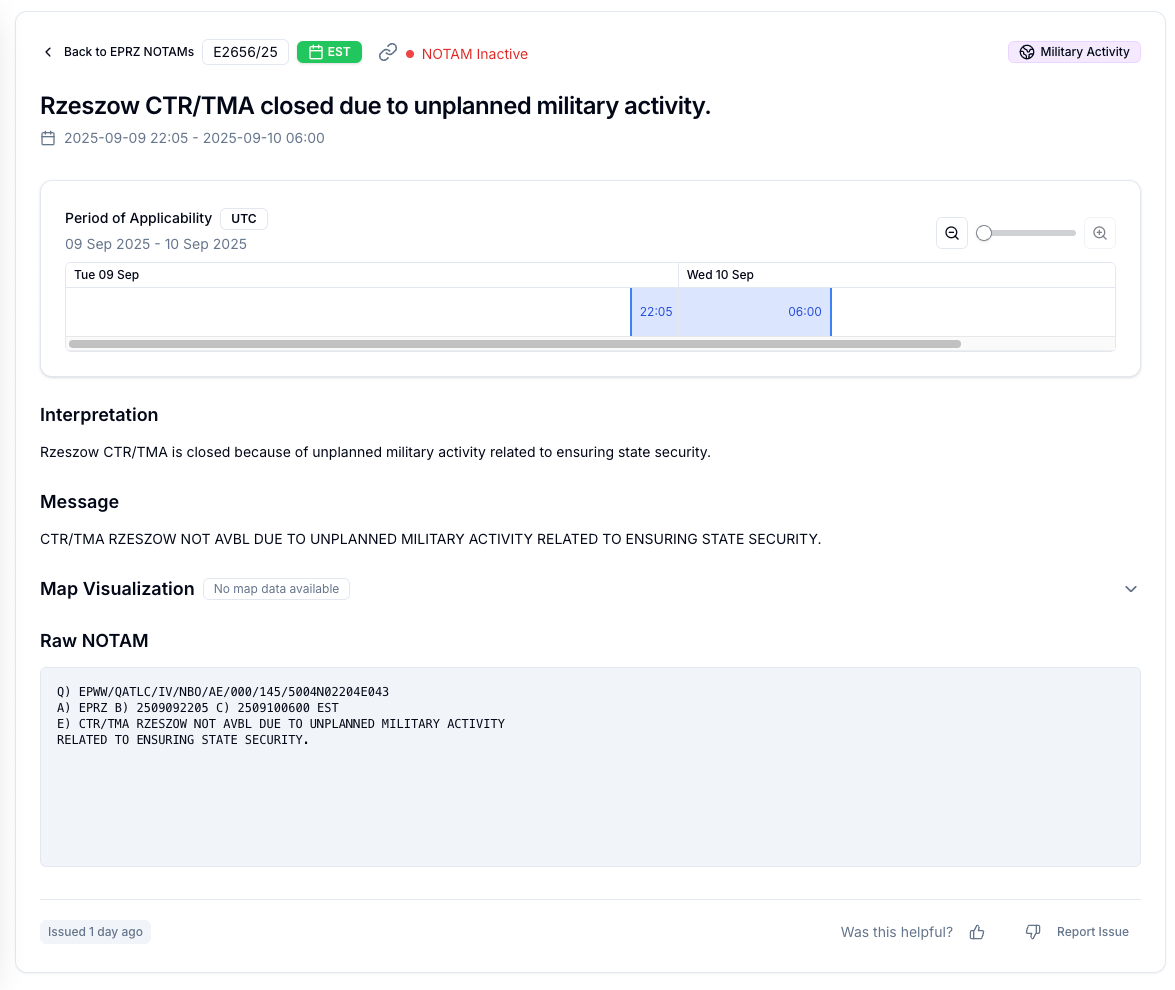
A similar NOTAM was issued for Lublin airport:
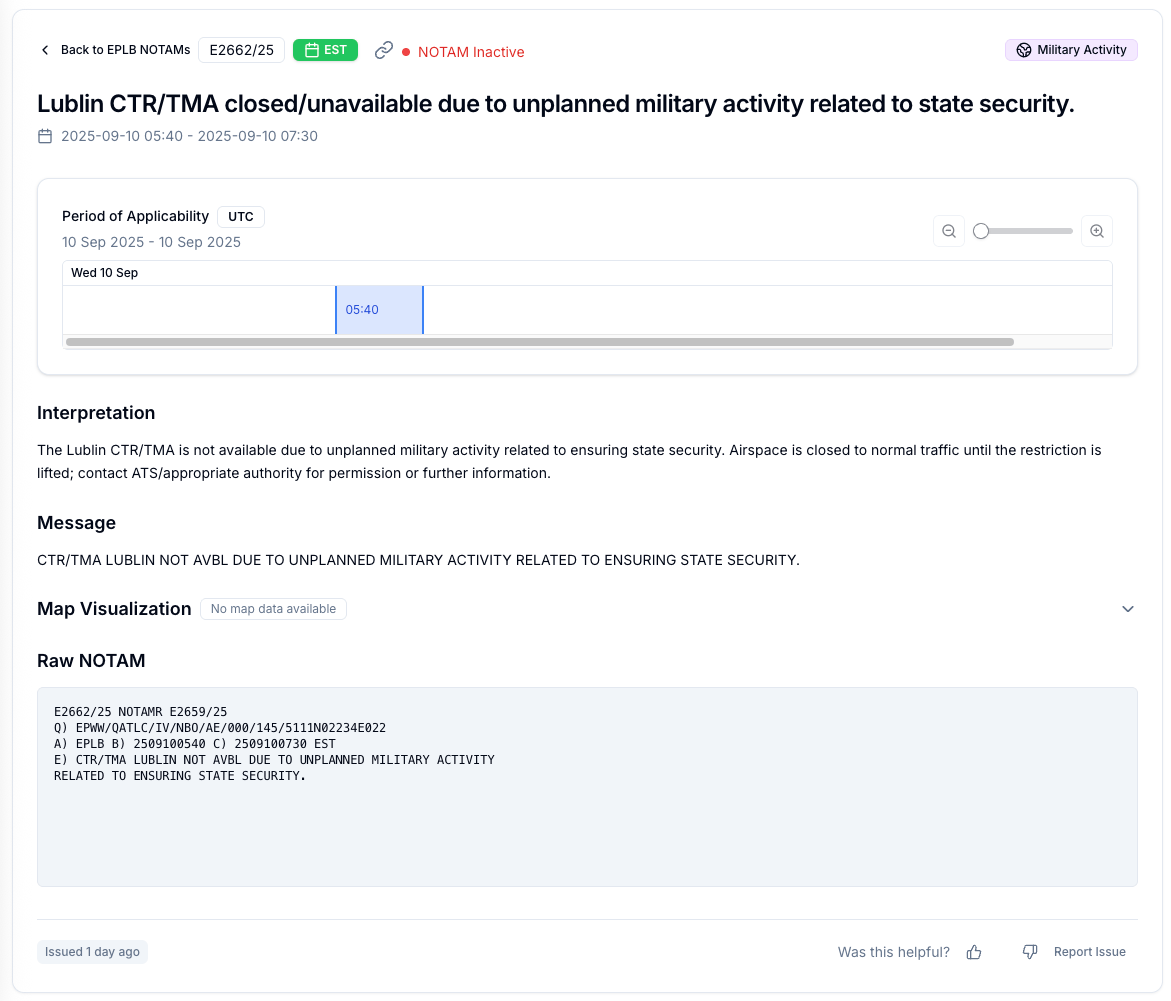
Both NOTAMs provided official confirmation that the airport closures were security-related. The Lublin NOTAM was more specific, explicitly mentioning "state security" while both referenced "unplanned military activity" - indicating active situations rather than scheduled exercises.
The OSINT Community Mobilizes
The NOTAMs received significant traffic on Notamify within hours - the Rzeszów NOTAM alone recorded over 5,000 visits, significantly higher than typical NOTAM traffic. Users included aviation professionals, journalists, and defense analysts seeking information during the information blackout.
Media Recognition and Social Media Validation

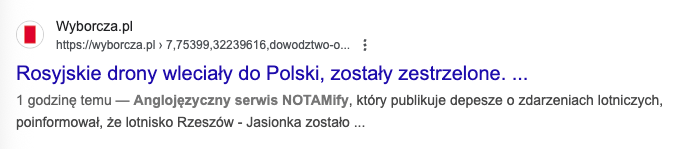
Major Polish news outlets Onet.pl and Wyborcza.pl cited Notamify and the specific NOTAMs in their reporting. On X (Twitter), users shared direct links to the Notamify NOTAM pages as proof of the developing situation.
The widespread sharing of these links showed how NOTAMs moved beyond their typical aviation audience to serve as a primary information source during the crisis.
The Intelligence Value of Aviation Data
NOTAMs proved useful for intelligence analysis because they are:
- Immediate - Published when conditions change, not after approval processes
- Standardized - Use consistent terminology that analysts can interpret
- Geographically precise - Include specific coordinates and boundaries
- Operationally relevant - Scope indicates situation severity
Lessons for the OSINT Community
Key takeaways for OSINT analysts:
- Include aviation sources in monitoring systems for airspace-related incidents
- Learn aviation terminology to properly interpret NOTAMs during crises
- Cross-reference NOTAMs with other intelligence sources
- Use historical data to identify patterns and compare incidents
Conclusion
The September 10th drone incident showed how NOTAMs can serve as early intelligence sources when official communications are limited. The Rzeszów NOTAM received over 5,000 visits and was cited by major Polish media outlets, demonstrating the practical value of aviation data for situational awareness.
For intelligence analysts, this incident highlights the importance of monitoring aviation sources alongside traditional intelligence channels. NOTAMs provide immediate, standardized, and geographically precise information that can be crucial during developing security situations.
Join other largest media companies who are using Notamify for their data intelligence using Notamify Dashboards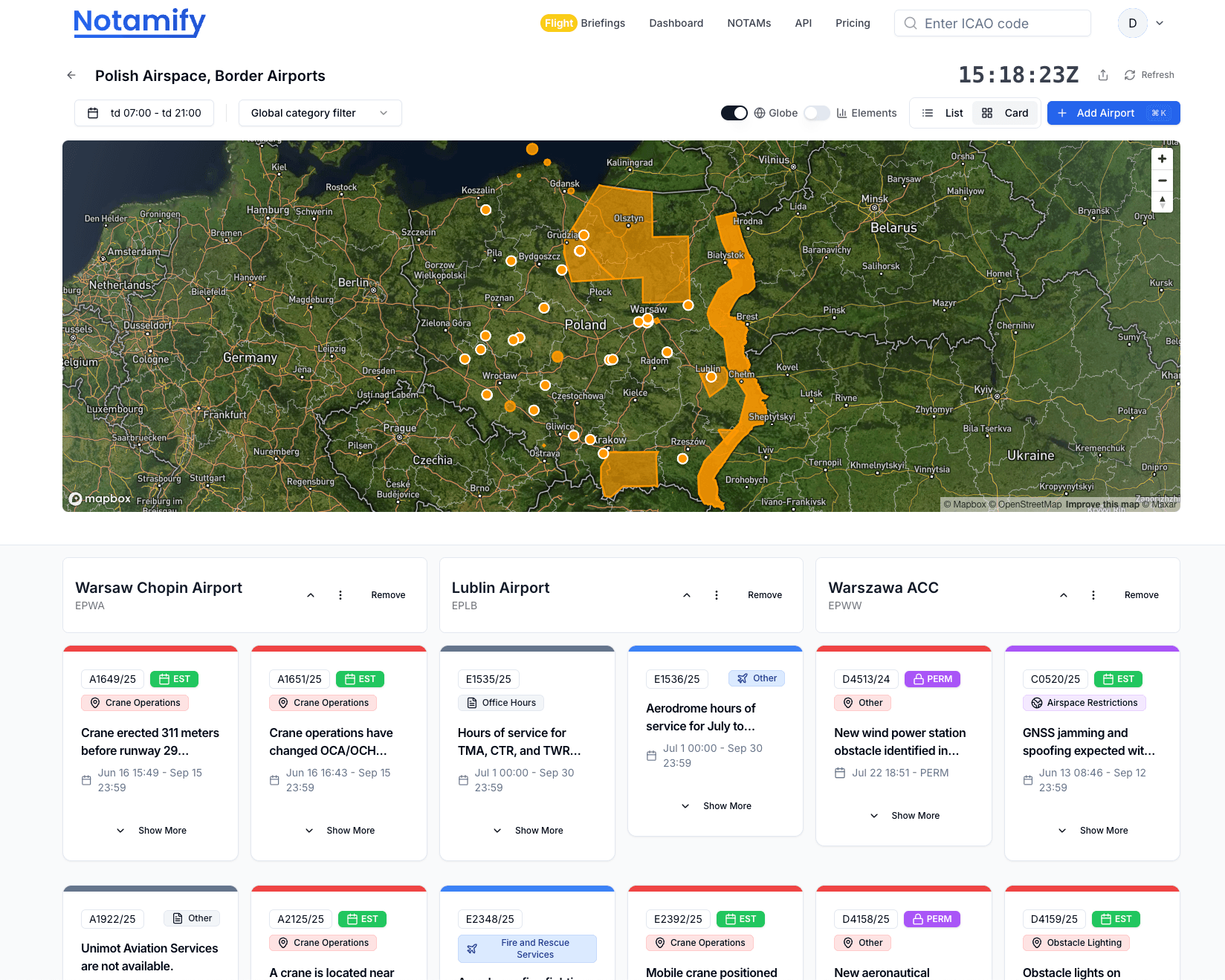

Read more...
Your AI Agent, Connected to Notamify
10/6/2026
Use Notamify coverage, interpretations and briefings in Codex, ChatGPT, Claude and Muse Code. Connect with your existing account and manage access in Notamify.
Track Starship NOTAMs and Restrictions
9/27/2026
Explore Starship launch restrictions, route closures and re-entry NOTAMs on one map, with notices grouped by airport and flight information region.
Faster Flight Briefings and Automatic Airport Summaries
9/25/2026
Flight briefings now generate 47% faster with improved accuracy. Airport summaries take around few seconds, with a new Auto option for airport pages.
4 Million NOTAMs: What Happens After an Airport Closes
9/12/2026
A review of airport closures, changing airspace restrictions and the information available to flight operations teams in Notamify’s archives.